For practitioners
You already know how to progress your clients. Now your balance trainer can progress with them.
BALEROboard brings adjustability to balance training. Start where your client is, then change the challenge as they progress—whether they’re training to Restore, Perform, or Preserve.
Adjust the air. Change the fill. Rotate the direction. Then apply the exercises, loads, and progressions you already know.
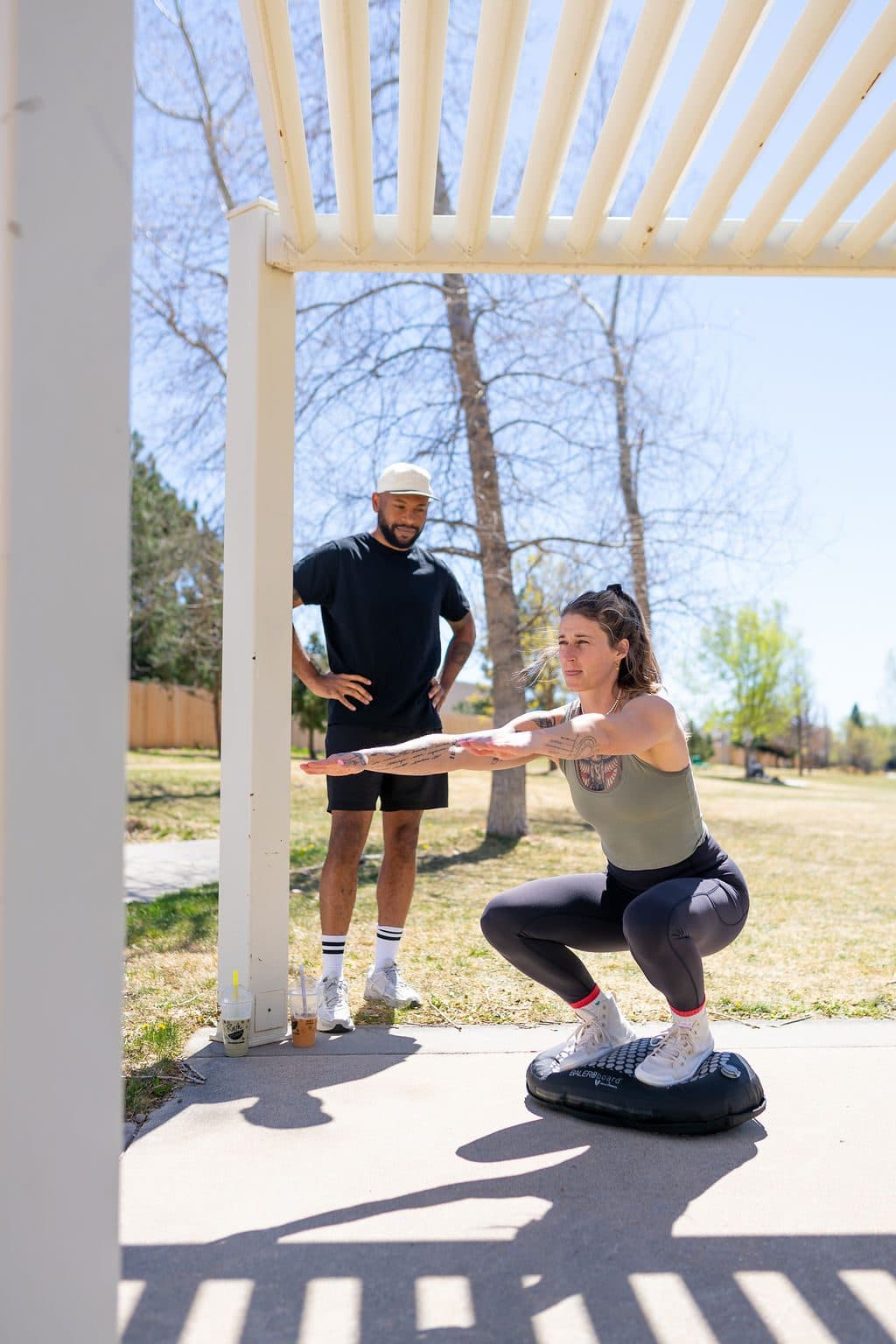
Progress shouldn’t require a different tool. It should require an adjustment.
You already have countless ways to progress balance—change the stance, reduce support, close the eyes, add movement, increase load, or introduce a second task.
But when you want to change the balance tool itself, your options have traditionally been limited.
A firm surface. A foam pad. A wobble board. A dome. Each creates a different challenge, but each is largely fixed at the challenge it was designed to provide. As the person progresses, you move to another tool.
BALEROboard gives you another option. Instead of changing equipment, adjust the equipment you already have.
Traditional balance equipment
Different tools. Different challenges.
BALEROboard
Same tool. A progression of challenge.
BALEROboard doesn’t replace the progressions you already use. It gives you an adjustable tool to use within them—whether the goal is to Restore, Perform, or Preserve.
Meet them where they are. Adjust as they progress.
There’s no single BALEROboard setting for beginner, intermediate, or advanced. The right amount of air depends on the person, the movement, and the challenge you want to create.
Start with the movement. Adjust the air. See how it feels. Then progress from there.
100% Inflated
Most Stable
Fully inflated, the board provides the most stable surface.
A strong starting point for learning a new movement, building confidence, or adding stability to a more challenging exercise.
75% Inflated
More Responsive
Release approximately 1 second of air from full inflation.
The board begins to respond more beneath the body, adding instability without dramatically changing the movement.
50–25% Inflated
More Challenging
Release approximately 2–3 seconds of air from full inflation.
With less air, the board becomes increasingly responsive to every shift in weight—requiring greater control and stabilization throughout the movement.
The key is that inflation level doesn’t define the person—it changes the challenge. A loaded squat at 100% can be more demanding than a simple stance at 50%.
And air is only one way to progress. Change the movement, stance, support, load, fill, direction—or combine them—to create virtually endless progression possibilities.
Start with the right challenge. Adjust as they progress.
Inflation percentages and release times are approximate progression guides. Adjust by sight and feel based on the movement and individual.
One tool. More ways to progress.
Progressive Balance Training isn’t about putting everyone on the same unstable surface. It’s about creating the right challenge for the person, the movement and the goal — then adjusting it as they progress.
That’s what makes BALEROboard different. Start more stable. Make it more responsive. Change the stance. Rotate the board. Add load. Reduce support. Change the movement. Add a dual task.
You decide what to progress and when.
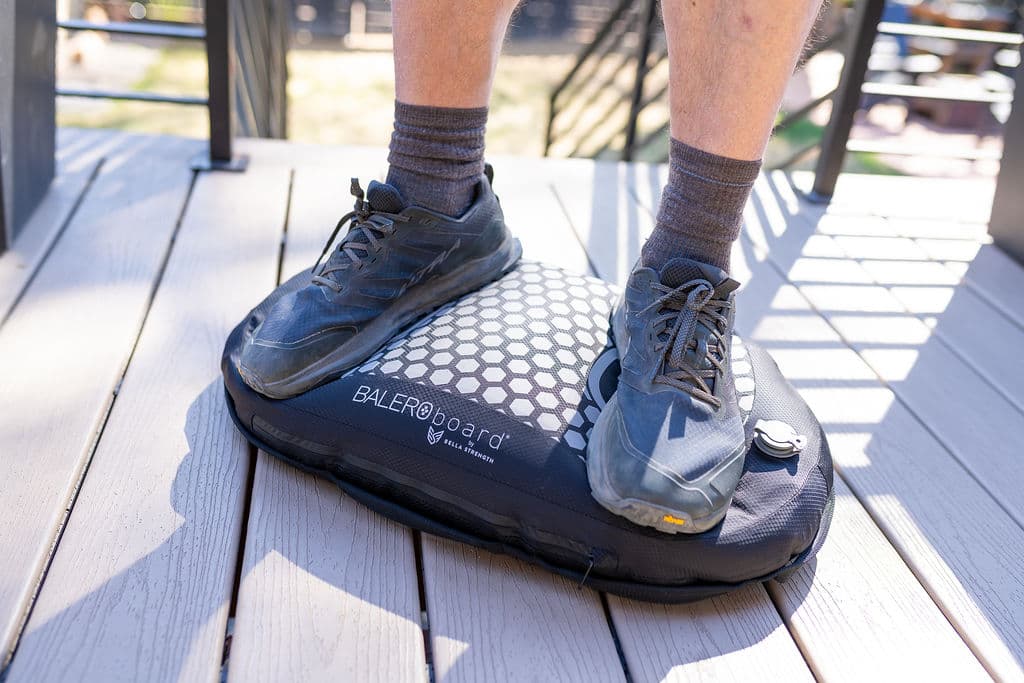
Start where they are.
Filled firm, BALEROboard provides a more stable starting point. Someone can begin seated with both feet on the board, progress to standing, and build from there.
The goal isn’t to make balance hard on day one. It’s to find the appropriate challenge today and create somewhere to go tomorrow.
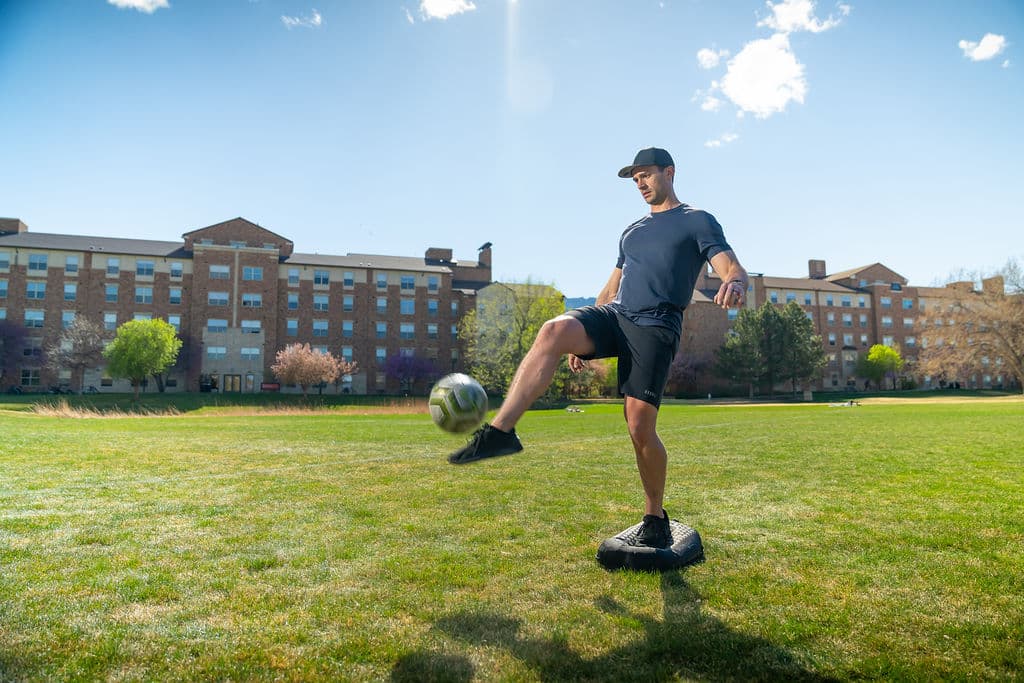
Keep progressing.
As control improves, the same board can become increasingly challenging.
Adjust the air. Change the resistance. Rotate the direction. Progress the stance, movement, load, support, vision or task.
A movement that starts simple can become significantly more demanding without changing equipment.
Use it beyond standing balance.
BALEROboard can become part of movements practitioners already program:
- Stand on it
- Squats, hinges, split-stance work, single-leg movements and loaded exercises.
- Put your hands on it
- Planks, push-ups, quadruped work and upper-body stability challenges.
- Kneel or sit on it
- Core work, mobility and trunk-stability exercises.
- Load it
- Add external resistance—or fill the board with water and use the board itself as a shifting load.
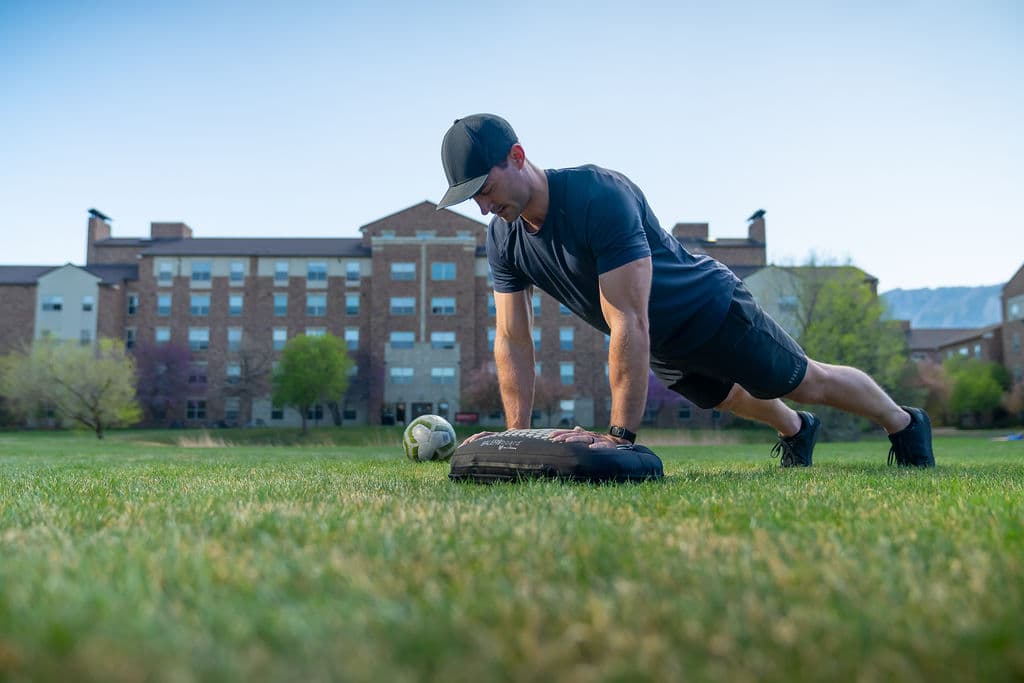
One tool doesn’t prescribe the exercise. It gives practitioners more ways to progress it.
“It is one of the best tools that I’ve had working on fall risk. The best part about it is how user friendly it is.”
Don’t just read about it. Experience it.
Progressive Balance Training makes more sense when you feel the progression yourself.
We’re inviting physical therapists, personal trainers, strength coaches, athletic trainers and other health & wellness professionals to experience BALEROboard firsthand.
See how adjusting the air, resistance and direction changes the challenge. Explore different movements. And experience how one tool can meet someone where they are and continue to adjust as they progress.
Fill out the form to book a free demo session for you or your team.

Book a Free Demo Session
Interested in experiencing Progressive Balance Training with BALEROboard? Complete the form below and we’ll follow up to schedule a complimentary demo session.
We’ll contact you to arrange a demo date and time.